Every player wants to be faster, stronger, and harder to play against. Almost none of that is built on the ice. It is built off the ice, in the work you do between practices and across the summer. That work has a name. Coaches call it off-ice training, or dryland, and done well it is the single biggest lever a hockey player has over how good they become.
This guide is the complete picture: what off-ice training is, the qualities it develops, how to set up a week, what gear you need, and how the right plan changes from a young skater to a masters player. It is built on sport science and on what actually works with players at every level. By the end you will know exactly what to do, and where to start.
What off-ice (dryland) training actually is
Off-ice training is simply any training a hockey player does away from the rink to improve performance on it. Dryland is the older word for the same thing, and you will hear the two used interchangeably. It covers a lot of ground: sprinting and jumping for speed and power, strength work with bands or weights, conditioning that mirrors the stop-and-start nature of a shift, mobility to move freely, and the prep work that keeps you healthy enough to train at all.
What it is not is random. Doing a few push-ups when you remember to, or jogging now and then, is not off-ice training. A real program develops specific qualities in a deliberate order so they add up. That structure is the difference between a player who looks the same in October as they did in June and one who shows up transformed.
Why off-ice training is where players really improve
On the ice you practice skills: skating, passing, shooting, reading the game. Those are essential, but the physical engine underneath them, how fast you accelerate, how hard you can battle, how long you hold your speed, and how hard you shoot, is built off the ice. The summer is the only stretch of the year with no games to recover from, which makes it the only time you can ask your body for real change.
And it transfers. This is the part skeptics miss. In high-level players, a program that combined plyometrics with strength training produced greater improvement in on-ice sprint speed than strength training alone. The first step you build in a driveway in July is the first step you keep in a game in October. Hockey itself is a repeat-sprint sport, with shifts of roughly 30 to 80 seconds and a couple of minutes of recovery between them, so the engine that lets you repeat those bursts is trained off the ice too.
Skills are sharpened on the ice. The engine that drives them is built off it.
The six pillars of a complete off-ice program
A complete off-ice program is not just lifting, and it is not just conditioning. It develops six qualities. Skip one and you leave performance on the table or invite injury. Here is what each one is and why it matters for hockey.
| Pillar | What it is | Why it matters for hockey |
|---|---|---|
| Speed & acceleration | Sprints, starts, change of direction | Wins races to pucks and creates separation |
| Power | Jumps, bounds, throws | Explosive first step and a harder stride |
| Strength | Squat, hinge, push, pull, single leg | Wins battles and protects the puck |
| Conditioning | Intervals and repeat sprints | Holds your speed into the third period |
| Mobility | Hips, ankles, t-spine, groin | A deeper, more powerful stride |
| Injury prevention | Landing, single-leg control, core | Keeps you on the ice instead of the bench |
That last pillar is worth its own sentence. Structured injury-prevention work cuts lower-limb injuries in youth athletes by roughly 42 percent, and it only takes ten to fifteen minutes a few times a week. The best program in the world does nothing for you if you are hurt, so this is built into every good warm-up rather than treated as an afterthought. For the deeper playbook on staying healthy, from the groin to the knees, see our guide to injury-proofing your hockey season.
What equipment you actually need
This is where most people overestimate the barrier. You do not need a gym membership, a squat rack, or a basement full of machines to train off the ice effectively. For the vast majority of players, the whole toolkit is:
- A set of resistance bands. The most versatile, portable, joint-friendly tool there is.
- Your bodyweight. Squats, push-ups, lunges, planks, jumps, and sprints need nothing at all.
- A little space. A garage, a driveway, a backyard, or a stretch of field for the running work.
- Optional extras. A pair of light dumbbells and a low box expand what you can do, but they are not required to start.
This is exactly why off-ice training travels so well. You can run a complete session at home, at the cottage, or in a hotel room on the road. The barrier was never the equipment. It was always the plan.
How often should you train off the ice?
The honest answer is that it depends on the time of year. During the season, the goal is to maintain what you built without adding fatigue that hurts your play. In the off-season, you have room to push for real gains. A simple, proven structure looks like this:
| Time of year | Off-ice sessions | Focus |
|---|---|---|
| In-season | 2 short sessions | Maintain strength and power, stay healthy |
| Off-season | 3 to 4 sessions | Build muscle, strength, power, and your engine |
| Pre-season | 3 sessions | Sharpen speed and power, then taper |
You do not need marathon workouts. Most quality off-ice sessions run 35 to 60 minutes including the warm-up. Consistency across the whole summer beats a handful of heroic weeks. For the full week-by-week structure, read our companion guide, the off-season blueprint.
Off-ice hockey training by age
The biggest mistake in dryland training is giving a young player a shrunk-down adult program. The qualities you train are similar, but the emphasis, the loading, and the point of the whole thing change a lot with age and maturity. Here is how to think about it, with a ready-built program for each stage.
Ages 9 to 11
Movement skill, coordination, and bodyweight strength through fun, varied training. Build the athlete first. See the Ages 9 to 11 program →
Ages 12 to 14
The growth years. Get faster and more coordinated while protecting the body through a major growth window. See the Ages 12 to 14 program →
Ages 15 to 18
The window where real strength and power are built. Train to compete with structured lifting and speed work. See the Ages 15 to 18 program →
Adults 19 to 39
You already train and skate. This is a focused block to get measurably faster and more powerful. See the Adults 19 to 39 program →
Ages 40 and up
Stay fast, strong, and durable. Durability-first training built around recovery, so you keep playing well. See the Ages 40+ program →
The old belief that strength training stunts a child's growth has been discredited. Peer-reviewed reviews conclude that, when properly designed and supervised, resistance training is safe and beneficial for children and adolescents, and the American Academy of Pediatrics endorses supervised strength training for young athletes. The real risk is poor coaching, not the act of training itself.
Want the plan built for you?
Each of our 8-week off-ice programs is fully mapped out for its age group, with the exact exercises, sets, reps, and a demo video for every movement.
Off-ice exercises to start with
You do not need a hundred exercises. You need a handful of high-value ones done well. These map directly to how hockey players move, and every one can be done at home. Each links to a full demo in our exercise library.
- Lateral skater bounds for the side-to-side power that drives your stride. See the lateral bound.
- Broad jumps for explosive, forward power off both legs. See the broad jump.
- Pogo hops for stiff, springy ankles and a quicker first step. See pogo hops.
- Copenhagen plank for groin strength, one of hockey's most injury-prone areas. See the Copenhagen plank.
- Bear crawls for full-body control and core stability. See the bear crawl.
Browse the full off-ice exercise library for video demonstrations of every movement, organized by what it trains.
The most common off-ice training mistakes
Most wasted summers come down to the same handful of errors. Avoid these and you are ahead of most players already.
- No plan. Random workouts produce random results. Structure is the whole game.
- Only conditioning. Endless running with no strength or power leaves you fit but slow.
- Skipping the warm-up. The prep work is where injury prevention lives. It is not optional.
- Copying pro or adult programs as a youth. Match the work to the body and the training age.
- Going too hard, too soon. Quality beats quantity. A clean, fast jump beats ten sloppy ones.
- Quitting after two weeks. Adaptation takes time. The players who win are the ones who finish the block.
Frequently asked questions
What is off-ice training in hockey?
It is any training a player does away from the rink to improve on-ice performance: speed, power, strength, conditioning, mobility, and injury prevention. Dryland is another word for the same thing.
What is dryland training?
Dryland is simply the traditional term for off-ice training. There is no difference. Both describe the physical preparation hockey players do off the ice.
Can I train for hockey at home without a gym?
Yes. Resistance bands, your bodyweight, and a little space cover the vast majority of effective off-ice training. A gym is a nice option, not a requirement.
How many days a week should a hockey player train off the ice?
Two short sessions a week maintain your level in-season. Three to four sessions in the off-season build real strength, power, and conditioning.
Is it safe for young kids to strength train?
Yes, when it is properly designed and supervised. The research is clear that age-appropriate resistance training is safe and beneficial for children and adolescents. The key is good coaching and the right program for their age.
The bottom line
Off-ice training is not a supplement to playing hockey. It is where the player you become is actually built. Train the six pillars, use the simple gear you already have, match the work to your age, and stay consistent across the summer. Do that, and the difference will show up exactly where it counts: in your first step, your stride, and your last shift of the night.
References
The performance claims above are drawn from peer-reviewed research and recognized strength-and-conditioning sources. Week-to-week scheduling reflects common coaching practice, as noted in the text.
- Dæhlin TE, et al. Improvement of ice hockey players' on-ice sprint with combined plyometric and strength training. International Journal of Sports Physiology and Performance. 2017. PubMed 27918670
- Rago V, et al. Game demands of a professional ice hockey team with special emphasis on fatigue development and playing position. Journal of Human Kinetics. 2022. PMC9679183
- Steib S, et al. Dose-response relationship of neuromuscular training for injury prevention in youth athletes: a meta-analysis. Frontiers in Physiology. 2017. PMC5694483
- Myers AM, Beam NW, Fakhoury JD. Resistance training for children and adolescents. Translational Pediatrics. 2017. PMC5532191
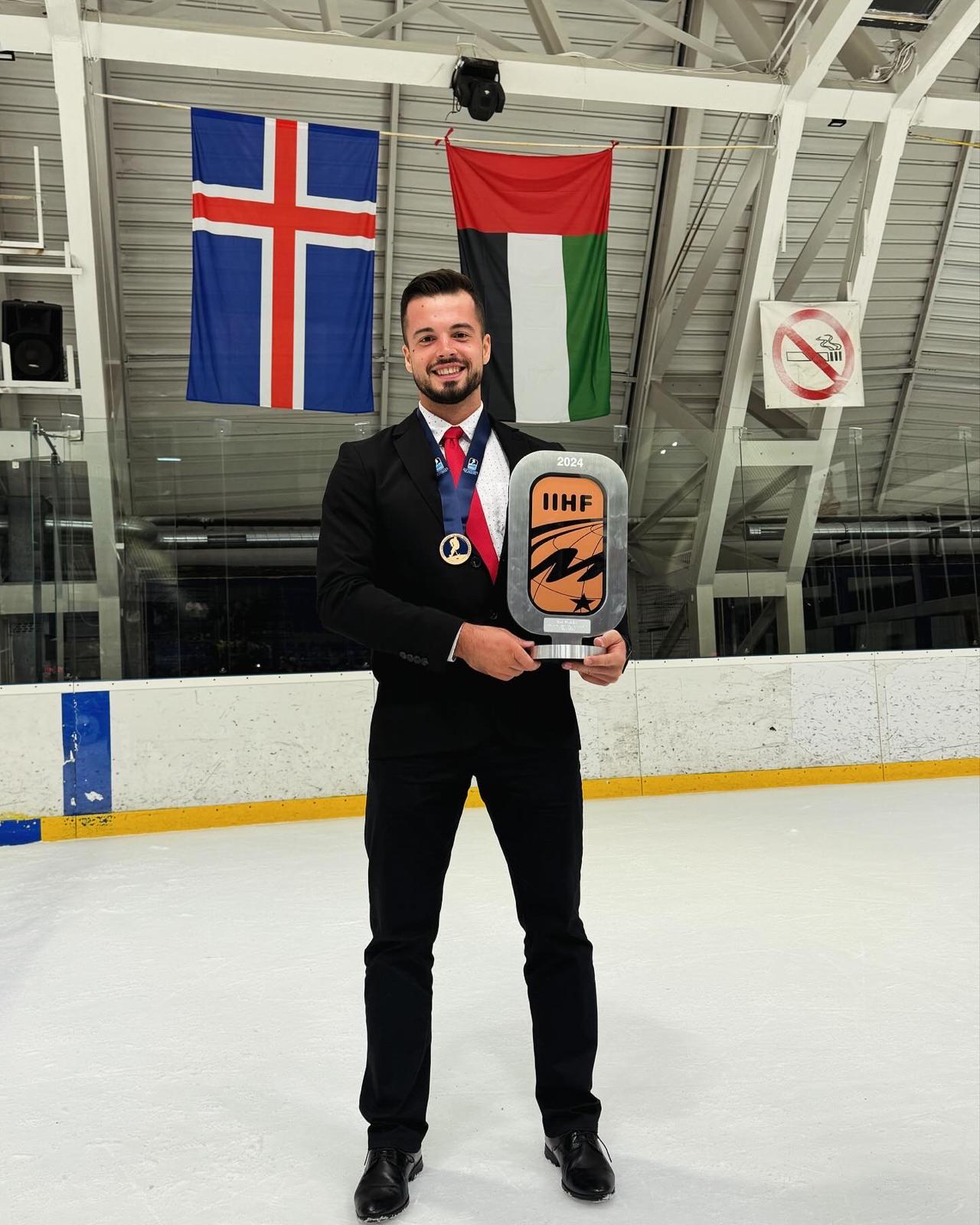
David builds science-based off-ice training for hockey players at every level, from first-year youth skaters to adult and masters players. Elite Hockey Drills exists to put real sport science in the hands of players who want to train smarter, not just harder.