Here is a hard truth most hockey players learn too late. You do not build a faster, stronger body in the gym. You build it at the table, in the hours after the gym, using the food you give your body to repair and grow. Training is the request. Food is the raw material that fills it. Train hard all summer on a poor diet and you are asking your body to renovate a house without delivering any lumber.
The off-season is when this matters most, because it is when you are asking for the biggest changes: more muscle, more power, a leaner and more durable frame. It is also the time of year you finally control your own meals, with no road trips or rink food forcing your hand. Nail your nutrition for these few months and every hard session actually turns into results. This guide walks through exactly how, with the science to back each piece, written for players and parents at every age.
Why off-season nutrition is your secret weapon
Most players obsess over the training and treat food as an afterthought. That is backwards, and it is exactly why nutrition is such an edge: almost nobody does it well. The athletes who pull ahead over a summer are rarely the ones who trained the hardest. They are the ones who recovered the best, and recovery is built on what you eat and how you sleep. Get the food right and you get more out of every single workout you were already doing.
Protein: build the engine
If you change one thing about your diet, make it protein. Protein supplies the amino acids your body uses to repair and build muscle after training. The International Society of Sports Nutrition's position stand concludes that 1.4 to 2.0 grams per kilogram of bodyweight per day is enough to build and keep muscle for most people who exercise, and that pushing toward 1.6 to 2.2 grams per kilogram is linked to greater gains in lean mass for those doing serious resistance training.
What that looks like in practice: a 70 kilogram (about 154 pound) player would aim for roughly 112 to 154 grams of protein a day. Just as important as the total is how you spread it out. The research points to roughly 20 to 40 grams of quality protein per meal, every three to four hours, rather than one giant serving at dinner. Each meal restarts the muscle-building process, so three or four solid protein hits beat one big one.
Good sources are the obvious ones: chicken, beef, fish, eggs, dairy, and for plant-based players, a deliberate mix of soy, legumes, and grains. After a hard session, getting a protein-rich meal in within a couple of hours is a simple, effective habit.
Carbohydrates: fuel for the work required
Carbohydrates have an image problem, and it costs players performance. Carbs are your body's preferred fuel for the high-intensity work hockey demands. They refill the glycogen in your muscles, which is the gas tank for sprinting, jumping, and lifting. Cut them too low and your hard sessions fall apart.
The smart approach is sometimes called fuel for the work required: match your carbohydrate intake to that day's training. Sports nutrition guidelines from the Academy of Nutrition and Dietetics, Dietitians of Canada, and the American College of Sports Medicine scale daily carbohydrate to training load: around 3 to 5 grams per kilogram on light days, 5 to 7 for moderate training, and 6 to 10 grams on heavy days. On a big lifting or conditioning day, eat more carbohydrate. On a rest or skills day, pull it back. You give your body fuel when it needs it and avoid empty surplus when it does not.
Carbohydrate is not the enemy of a lean athlete. Under-fueling is the enemy of a good one.
Build muscle or lean out, the right way
Most off-season players want one of two things: add quality muscle, or get leaner without losing a step. Both are doable, and both have a research-backed rate.
To build lean mass, you need a modest calorie surplus. The evidence suggests eating around 10 to 20 percent above maintenance and aiming to gain roughly 0.25 to 0.5 percent of your bodyweight per week. Slower than that and you may be leaving muscle on the table; much faster and you are mostly adding fat. Gaining muscle is not a license to eat everything in sight.
To lose fat while keeping muscle, go the other direction gently. A loss of about 0.5 to 1 percent of bodyweight per week protects performance and lean mass far better than a crash diet, and the leaner you already are, the slower you should go. Keeping protein high during a cut is what preserves the muscle you worked for.
There is a catch that deserves its own warning, and it is the most common serious mistake in this whole area: under-eating. When energy intake drops too low relative to training, the body protects itself by downshifting recovery, hormones, bone health, and immune function. Sports scientists measure this as low energy availability, and they consider chronically low intake a driver of impaired performance, higher injury risk, and hormonal and bone problems, a condition known as Relative Energy Deficiency in Sport, or RED-S. More is not always better with restriction. Eating enough is not a weakness. It is the foundation.
Fuel a plan worth fueling
Great nutrition multiplies great training. Our 8-week off-ice programs give your food something worth turning into results.
Hydration, even off the ice
You sweat plenty in a summer gym, and even mild dehydration drags down strength, endurance, and focus. The National Athletic Trainers' Association recommends keeping fluid losses under about 2 percent of bodyweight during exercise, and replacing 100 to 150 percent of what you lose afterward when your next session is soon. A simple way to track it: weigh yourself before and after a hard session, since roughly each kilogram lost equals a litre of fluid to replace. Add some sodium back when you sweat heavily, and use the color of your first morning urine as a quick gauge. Pale is the target, dark means catch up.
The micronutrients hockey players miss
A few specific nutrients punch above their weight for hockey players, and deficiencies are common.
Iron carries oxygen to your muscles, and running low leaves you flat and gassed. It matters most for teenage and female athletes: iron deficiency shows up in an estimated 15 to 35 percent of female athletes, far above the general population. Adult women need about 18 milligrams a day and teen girls about 15, while adult men need around 8, with teen boys closer to 11, according to national dietary guidelines. Red meat, poultry, and beans are strong sources. If you are constantly exhausted, ask a doctor to check your iron rather than guessing.
Vitamin D and calcium work together for bone strength and muscle function. The Institute of Medicine sets the calcium target at 1,300 milligrams a day for ages 9 to 18, the peak bone-building years, and 1,000 milligrams for most adults, alongside 600 IU of vitamin D. Many athletes run low on vitamin D, especially in winter climates, so it is worth having your level checked.
Omega-3 fats, found in fatty fish like salmon, support recovery and general health. There is no official daily requirement for the EPA and DHA forms, but a couple of servings of oily fish a week is a sound habit, and many athletes use a fish-oil supplement to fill the gap.
Supplements: what is actually worth it
The supplement aisle is mostly noise. Build your nutrition on real food first, because no pill or powder fixes a poor diet. That said, a short list has genuine evidence behind it.
Creatine monohydrate is the standout. It is one of the most studied supplements in existence, and the International Society of Sports Nutrition concludes it reliably increases lean mass, strength, and high-intensity power when combined with training, and is safe for healthy people, with a simple dose of 3 to 5 grams a day. Protein powder is not magic, just a convenient way to hit your protein target. Caffeine can improve training performance, though it needs to be timed carefully so it does not wreck your sleep.
For youth and younger teen players, food should do the entire job. Before a developing athlete uses any supplement, including creatine, the smart move is a conversation with a doctor or a registered sports dietitian. A well-built plate beats a supplement stack at every age, and especially during growth.
A day on the plate
Put it together and a strong off-season eating day is simple, not fussy. Aim for three or four meals, each built around a fist or two of protein, carbohydrate sized to the day's training, plenty of colorful vegetables and fruit, and some healthy fats. Bookend your training: a carbohydrate and protein meal a few hours before, and another within a couple of hours after. Drink to thirst across the day and top up around training.
One honest word for the adult and men's-league crowd. Alcohol is a real recovery cost. Research shows that drinking after training suppresses the muscle-building response, by roughly a quarter to a third in one study, even when you eat protein alongside it. You do not have to be perfect, but if you are serious about a training block, treat the weekend beers as part of the math.
Nutrition by age
The principles are universal. The emphasis shifts across a career.
Youth · 9 to 12
Fuel growth first, performance second. Never restrict calories. Focus on regular balanced meals, plenty of variety, and building a healthy relationship with food. Calcium and iron matter for growing bodies.
Teens · 13 to 18
Huge energy needs from growth plus heavy training. Keep protein steady through the day, do not skip meals, and watch iron, especially for girls. This is the worst age to under-eat.
Adults · 19+
Body composition and recovery come into focus. Protein and total energy still drive results. Manage alcohol, and respect that recovery nutrition matters more, not less, as you age.
Young athletes are building a body and an athlete at the same time, so their energy needs are high and their margin for under-fueling is small. Peer-reviewed guidance is clear that intake must be enough to cover growth on top of training, and that restrictive dieting has no place in youth sport. The goal at this age is consistent, balanced, plentiful meals and a calm, positive attitude toward food, not counting grams.
The bottom line
Off-season nutrition is not complicated, and it does not require a meal-prep empire or a cabinet full of supplements. Eat enough. Prioritize protein and spread it out. Fuel your hard days with carbohydrate and ease off on the quiet ones. Drink well, cover a few key micronutrients, and let real food do most of the work. Do that for a summer and you will not just train hard. You will actually keep what you build, and show up to the season as the most prepared player on the ice.
| Lever | Practical target | Why it matters |
|---|---|---|
| Protein | 1.6 to 2.2 g/kg/day, in 20 to 40 g meals | Repairs and builds muscle after training |
| Carbohydrate | Scaled to the day: 3 to 10 g/kg | Fuels high-intensity work and recovery |
| Building muscle | +10 to 20% calories, 0.25 to 0.5% BW/week | Adds lean mass while limiting fat gain |
| Losing fat | 0.5 to 1% BW/week, protein high | Leans out without losing your edge |
| Hydration | Under 2% loss; replace after | Protects strength, endurance, focus |
| Creatine | 3 to 5 g/day (adults) | The most proven performance supplement |
References
Every recommendation above is drawn from position stands and peer-reviewed research in sports nutrition. These guidelines are established for athletes broadly and applied here to hockey. Sources are listed below.
- Jäger R, Kerksick CM, Campbell BI, et al. International Society of Sports Nutrition position stand: protein and exercise. Journal of the International Society of Sports Nutrition. 2017. PMC5477153
- Kerksick CM, Arent S, Schoenfeld BJ, et al. International Society of Sports Nutrition position stand: nutrient timing. Journal of the International Society of Sports Nutrition. 2017. PMC5596471
- Thomas DT, Erdman KA, Burke LM. Nutrition and athletic performance (Academy of Nutrition and Dietetics, Dietitians of Canada, American College of Sports Medicine joint position). 2016. PubMed 26920240
- Impey SG, Hearris MA, Morton JP, et al. Fuel for the work required: a theoretical framework for carbohydrate periodization. Sports Medicine. 2018. PMC5889771
- Lodge, et al. Considerations of low carbohydrate availability and Relative Energy Deficiency in Sport in endurance athletes. Nutrients. 2023. PMC10609849
- Iraki J, Fitschen P, Espinar S, Helms E. Nutrition recommendations for bodybuilders in the off-season: a narrative review. Sports (Basel). 2019. PMC6680710
- Aragon AA, Schoenfeld BJ, et al. International Society of Sports Nutrition position stand: diets and body composition. Journal of the International Society of Sports Nutrition. 2017. PMC5470183
- McDermott BP, Anderson SA, Armstrong LE, et al. National Athletic Trainers' Association position statement: fluid replacement for the physically active. Journal of Athletic Training. 2017. nata.org
- Kreider RB, Kalman DS, Antonio J, et al. International Society of Sports Nutrition position stand: safety and efficacy of creatine supplementation. Journal of the International Society of Sports Nutrition. 2017. PMC5469049
- Smith JW, Holmes ME, McAllister MJ. Nutritional considerations for performance in young athletes. Journal of Sports Medicine. 2015. PMC4590906
- Desbrow B, et al. Sports Dietitians Australia position statement: sports nutrition for the adolescent athlete. International Journal of Sport Nutrition and Exercise Metabolism. 2014. PubMed 24668620
- Parr EB, Camera DM, Areta JL, et al. Alcohol ingestion impairs maximal post-exercise rates of myofibrillar protein synthesis. PLOS ONE. 2014. PLOS ONE
- Institute of Medicine. Dietary Reference Intakes for Calcium and Vitamin D. National Academies Press. 2011. NCBI Bookshelf
- Iron in diet. MedlinePlus, U.S. National Library of Medicine. medlineplus.gov
- Nolte, et al. Approaches to prevent iron deficiency in athletes. German Journal of Sports Medicine. 2024. germanjournalsportsmedicine.com
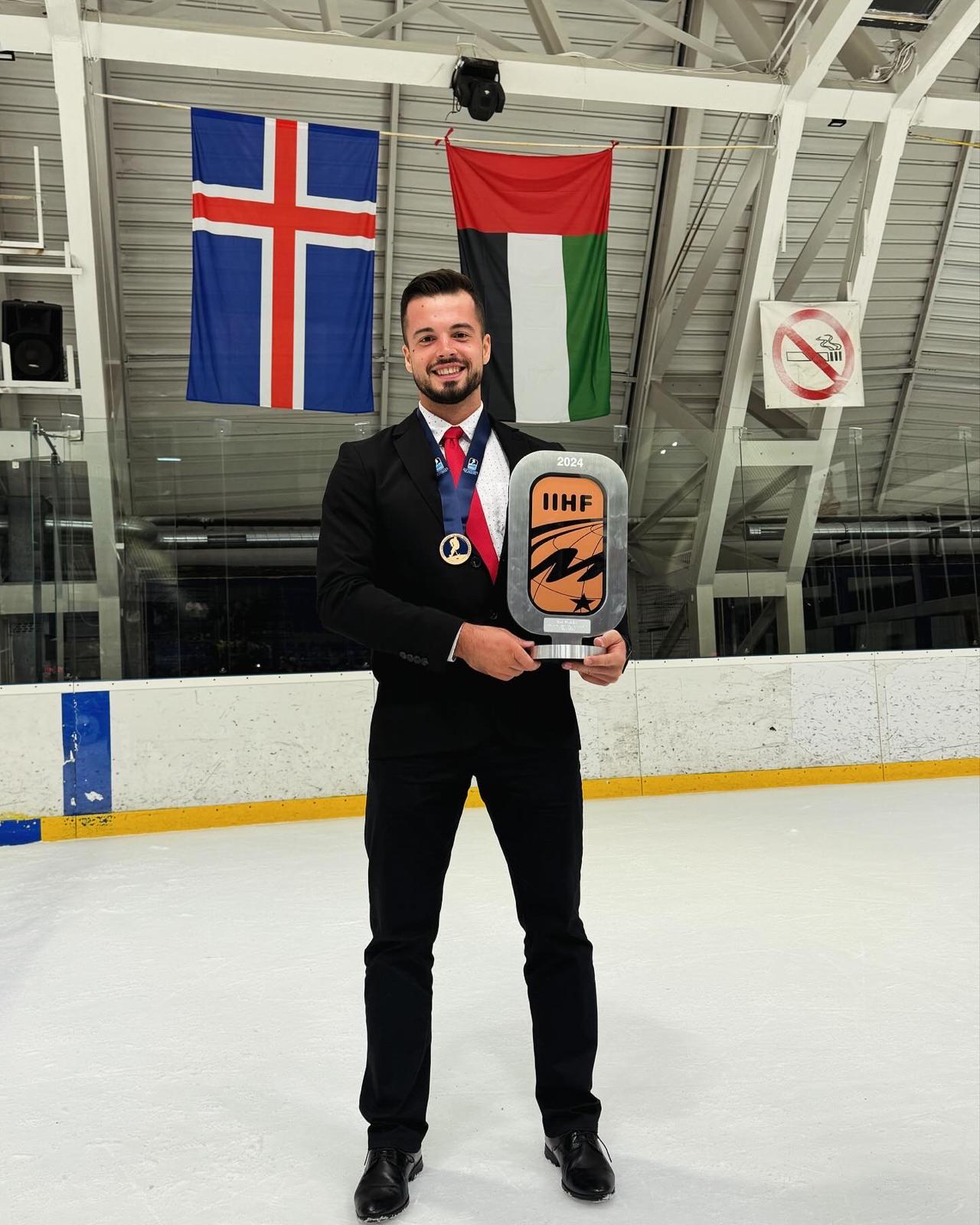
David builds science-based off-ice training for hockey players at every level, from first-year youth skaters to adult and masters players. Elite Hockey Drills exists to put real sport science in the hands of players who want to train smarter, not just harder.